



Nov 13, 2025 8:42 pm
Each player makes a single Spriteling. These are mysterious wilderness creatures, inclined towards acting as symbiotic guardians of their biome. They have varied bodies, usually land-dwelling or amphibious (if you want limited flight, it requires having a special trait with a somewhat expensive activation cost), with fine manipulators, on average about one 'spriteling yard' tall (but exceptions in both directions may exist), and usually weighing 20-75 pounds at that size. They have been created by the elder mushroom ring with an intuitive understanding of some topics (including both mundane wisdom and some supernatural capabilities) and some vague ancestral memories that may resurface when prompted, but no experiential memories.
As a player, decide on and write down the following details in a way that would make them fit into a coherent concept:
More details on character creation (and scaling and other topics) can be found in the Dramalogs file.
Draft character write-ups and big questions warranting 'official' rulings saved for posterity are a good fit for this thread, but it's probably more convinient to do quick discussion in Discord. Drafts are, of course, not final, and are to be shown to everyone for discussion before finalisation.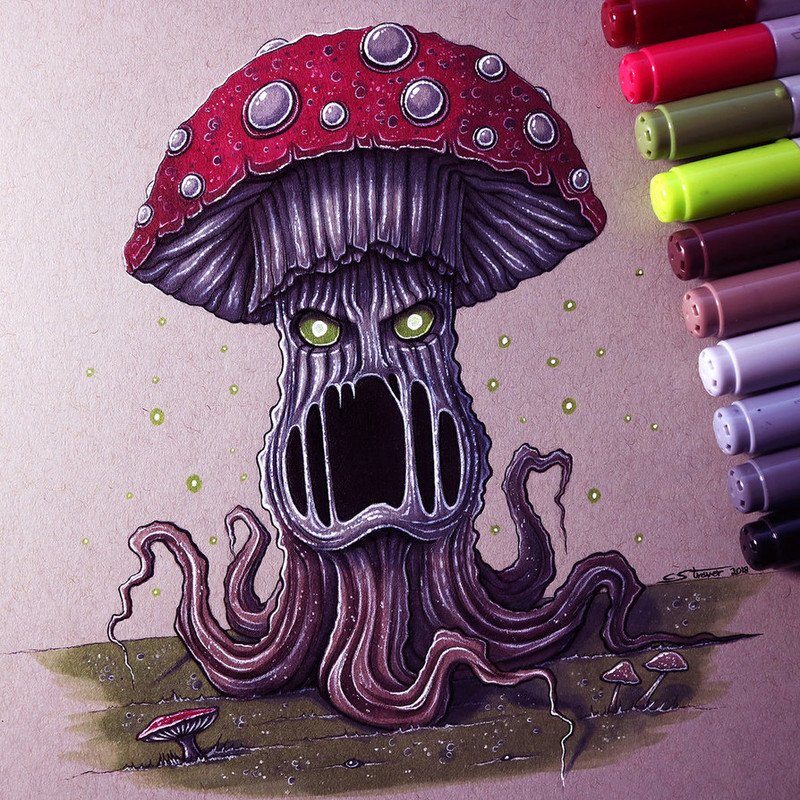
"Am mushroom; so what?"
Jade is a snarky, ambulatory mushroom. Standing upright at a mere half a yard tall, it is nonetheless a sturdy and sharp-toothed little fellow. It moves on little root-like limbs, though is a bit clumsy and slow.
Static Fortes (all standard breadth/cost of 4/level, for a net 100 points):
Attack 6,
Biomedical Lore 1,
Brawn 3,
Crafts 2,
Defence 3,
Esoterica 1,
Integrity 3,
Manipulation 1,
Stealth 2,
Survival 3.
Dynamic Fortes (93 points spent, 7 unspent):
Vicious Little Mushroom 3 [3×15=45] (breadth 15: benefits Attack, Defence, Stealth, intimidation, subsiting on deficient diet, and maybe a bit more of the cases where small size or viciousness is beneficial).
Second Sight 4 [4×12=48] (Breadth 12: supernatural trait; benefits approximately the full scope of Situational Awareness, Investigation, Insight).
Flaws (90 points spent, 10 unspent):
Clumsy Sit-at-Home 3 [3×5=15] (breadth 5: covers Mobility and the physical aspects of Travel, but not Attack/Defence).
Can't Have Nice Things! 3 [3×25=75] (breadth approximately 25: becomes distracted, annoyed, or confused when presented with compliments, kindness, gifts, tasty treats, &c., by allies, which can manifest as incompetence in absolutely any skills practiced for the rest of the scene).
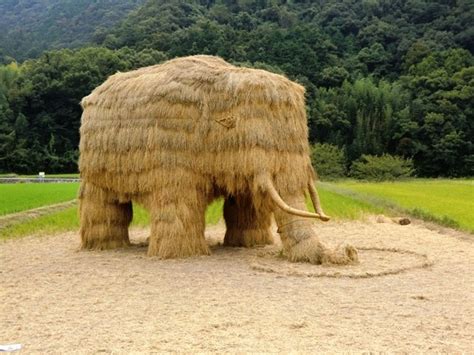
"What can old wooly do for you?"
Grass was made by the Elder Mushroom Ring from last autumn's dried grass, shaped into an elephant, and imbued with life. It is a large and strong but peaceful creature, towering above its buddies of the circle and protecting them. While its trunk is an even finer manipulator than that of natural elephants, it's not very well-versed in crafting and other technological matters.
Static Fortes (all standard breadth/cost of 4/level, for a net 100 points):
Animal Handling 3,
Attack 0,
Brawn 10,
Defence 6,
Survival 3,
Travel 3.
Dynamic Fortes (100pts):
Gentle Giant 5 [5×12=60] (breadth approximately 12: Brawn, Defence, most Persuasion, some situations where size might be beneficial).
Nature Magic 2 (2×20=40) (breadth approximately 20: covers a scope approximately equivalent to Animal Handling, Biomedical Lore, Survival, Travel, and can serve as a decent substitute for Defence).
Flaws (75):
Walk Like a Mammoth 5 [5×15=75] (breadth approximately 15: situations where large size might be an inconvenience, such as having a harder time foraging enough food, not fitting into small spaces, Stealth, &c.).
Note: I do not have a pre-approved format for character sheets in mind, so am open to any suggested easily-readable format.
As a player, decide on and write down the following details in a way that would make them fit into a coherent concept:
- What is your Spriteling like visually and anatomically. It's best if you obtain an image (or several) that can be used both for conveying the visuals and serving as a source for the PC portrait on posts (if you don't have one, find some sort of glyph that would fill the portrait slot). It's better if you decide on a text colour that represents its voice for in-character speech, one that is readable in both dark and light schemes.
- A brief summary/description of a personality that is conducive to exploring the wilderness and setting right what went wrong, or at least doing what the elder mushroom circle wants from you.
- Spend 100 points on Static Fortes - the more mundane traits of your PC. The default list has Fortes costing 4 points per level. You can use those, negotiate custom traits, or mix and match. A trait level of 0 is an 'untrained adventurer' - not hopeless, but nothing to write home about; a level of 3 is about twice as good as an untrained character's trait; a level 10 is about ten times as good as untrained, and is the maximum trait level you can have during character creation.
- Spend 100 points on Dynamic Fortes - the more flexible, often supernatural traits of your PC. To use these traits, you spend Drama Charge. Unlike Static ones, these can provide benefits that are not reducible to a numeric bonus. Either choose traits that match the scope of mundane skills (if they represent mythic extension to mundane skills), or negotiate a more nuanced scope (broader, narrower, or just different) - the scope affects the cost per level.
- Spend up to 100 points on Flaws (you don't have to spend them all). These are negative Dynamic Traits. When they make an impact on your activities, you earn Drama Charge. Their scope and cost are chosen in a similar manner to other Traits.
- Spritelings start the campaign with no major gear, but can have some trinkets or decorations that are trivial to obtain - a wreathe of spring snowdrop flowers, a stone with a hole on a cord woven of torn bark, a pretty shell of a snail, a rodent skull. Opportunities to gather materials and craft gear will present themselves (though a PC without Survival and Crafting may take a while to do so). If you think it's important to start with some trinkets, describe them.
- A Spriteling begins a campaign with two language slots, adjusted by the Humanities trait (or a suitable replacement trait) using decibel scaling. Each slot can be spent on fully mastering either spoken or written forms of the following languages (or two slots for both): Beak, a shrieky, medium-high-pitch tongue; Croak, a guttoral, medium-low-pitch speech; Stag, a clicky, hissy speech. Coordinate with other players (not characters) to ensure at least one spoken form is shared by all spritelings. Spritelings will also be able to communicate with the elder mushroom circle regardless of language fluency. Written language is uncommon in the setting, so it's up to you whether you want to invest in it.
- None of the Spritelings have been given names by the elder mushroom ring, but you might have a suggestion your PC would offer to companions when the topic of names comes up. But maybe your companions will want to give you a nickname - be ready for it.
[ +- ] The default list of Static Fortes (skills)
This list is copied for ease of reference, with little to no adjustment for the campaign specifics. Standard Static Fortes (skills) cost 4 points per level.
Animal Handling
Skill of interactions and basic care procedures relating to animals. How to avoid provoking a bear, how to care for a horse daily, how to train a falcon. In highly controlled circumstances it should suffice for riding a horse, but for more adventurous situations, Travel is more appropriate.
Arts and Expression
Activities that are more æsthetics- than pragmatics-oriented, such as painting, making sculptures, poetry, or singing. This is a very broad trait, representing a diverse artistic education. Characters with this trait will usually have adjacent traits depending on their primary arts – Humanities for poetry or writing, Crafts for sculpture, Mobility for dancing, Presence for singing, and so on, perhaps at a lower level.
Attack
The Attack trait covers use of weapons and other methods of disposing of enemies, hitting targets, destroying objects, or taking objectives in a combat. It is rather abstract and can represent different approaches – mundane or otherwise. It only covers such competence in battle, so you may have, for example, a character with high Attack, one with Brawn, one with both, or one with neither, depending on desired characterisation.
Biomedical Lore
Knowledge of biology, physiology, medicine, and a touch of biochemistry (depending on availability of such knowledge in the setting).
Brawn
Strength, endurance, toughness, health. Useful for hard physical labour, breaking things, resisting illnesses or physical supernatural effects, running marathons, healing from injuries. If being brawny also makes your character powerful in a fight, take more levels of Attack and Defence along with it.
Bureaucracy
A catch-all for administrative and financial proficiency. Accounting, jurisprudence, management of organisations, keeping logistics in order, planning and balancing budgets, keeping track of statistics, filing and archiving records and books, properly forming documents. Whereas Leadership is important for being the face of an organisation, Bureaucracy covers the less glamorous but important roles in maintaining one.
This would be a highly unusual skill for Spritelings, but perhaps the players will think of a way to make it fit.
Crafts
Woodworking, sewing, smithing, jewellery, leatherworking, architecture. This trait represents a broad proficiency in making things. More down-to-earth characters are likely to have narrower traits instead, but a factotum will want to be able to cover all those topics and more.
Note that in the Spritelings campaign, this is mostly about woodworking, leatherworking, weaving, stone knapping. Metalworking has not yet been developed, and any architecture is limited to earthworks, woodworks, and maybe some cyclopean stone-laying.
Defence
Ability to withstand attacks in combat, as well as protect allies and objectives, contest assaults, and otherwise contribute to the defensive side of battles. This is an abstract trait that only covers being defensively effective in battle. It can represent toughing out attacks, or parrying and manoeuvring, or some supernatural defences. Depending on flavour, consider also taking other traits like Attack, Mobility, Brawn, Esoterica, and so on.
Esoterica
Occultism, theology, thaumatology, and other knowledges associated with the divine, mystical, and otherwise supernatural. Notice that this primarily covers the theoretical understanding of such phenomena and does not grant the ability to perform miracles – that would need to be obtained through other means. Though this skill could come in handy when one character is trying to undo or counter the supernatural workings of another.
For Spritelings, this skill is more about intuiting esoteric matters than being any sort of formal scholar.
Humanities
Literature, languages, history, pure philosophy, and various other disciplines dealing with culture and society, and softer sciences not covered by other Traits. This is also the Trait to use for estimating the number of languages the character is fluent in (with the baseline dependent on the campaign/setting).
In the spritelings campaign, most humanities are transferred orally. And yet, this skill also increases the number of language slots, which may be spent on becoming literate in the appropriate languages. Just keep in mind that the utility of writing will be limited.
Insight
Understanding others’ inner worlds. Interpreting body language. Reading the room. Noticing subtle mood shifts. Discerning lies and manipulation. The widely applicable skill of applied psychology.
Integrity
Patience, self-control, and willpower. Resistance to fear, mental stress, emotional pressure, temptation, and other ‘head-on’ mental influences. This is a predominately passive, defensive Trait.
Investigation
Aptitude for meticulous search for that which is hidden and interpretation of findings. Gathering evidence. Search for hidden doors. Comparison of seals and signatures. Interpretation of clues.
Larceny
The plethora of roguish proficiencies not directly related to hiding. Picking locks and pockets, forging documents, circumventing traps, recognising underworld slang, quietly forcing windows open, covertly passing messages and goods, sleight of hand, giving subtle signals to a co-conspirator, concealing objects on your person or in a building/vehicle.
In the Spritelings campaign, this is more about snatching stuff unseen, forging knots and patterns, but not lockpicking, because metalworking has not yet been developed.
Leadership
The aptitude for overseeing a group, inspiring underlings, keeping up morale, minimising the need for micromanagement, and understanding everyone’s in the right place. Whereas Bureaucracy covers the more technical sides of managing an organisation, Leadership is important for the more spotlit, interpersonal aspects.
Manipulation
The subtle art of concealing or faking emotional displays, deliberately misleading others, lying convincingly.
Mobility
Running, jumping, climbing, swimming, parkour, and other agile activities primarily concerned with getting somewhere quickly with the primarily obstacles being limited to bad terrain or other physical, inanimate barriers. In rare cases where it might be needed, this trait can also stand in for physical flexibility. A character also good at dodging should take Defence. A character who not only runs marathons, but can do so through a jungle, should consider taking Travel.
Natural Philosophy
Maths and the harder sciences, or their predecessors in societies predating solidification of the scientific methods.
Presence
Persuasion, intimidation, honest diplomacy, and other ‘head-on’ approaches to social influence. For more roundabout and insidious approaches, take Manipulation.
Situational Awareness
Ability to notice important details in a hectic situation and in a timely manner. Spotting an ambush on patrol, noticing that one of the machine’s gears is damaged, figuring out which direction the nearest exit is in a smoke-filled room during a sudden fire, immediately detecting an approaching ship from the crow’s nest, identifying friend or foe in a dark forest.
Stealth
Sneaking and camouflage. Use this to remain unnoticed or to conceal unmoving objects. At a stretch, this trait may be used to conceal items on your person, in a building or a vehicle, though this overlaps with Larceny.
Survival
The skill of living off the land, avoiding common hazards of the wilderness (or of living on the streets), fishing, trapping, hunting and foraging, improvising a shelter, tracking a quarry by a trail, finding/identifying/gathering potable water. If a character is meant to practice survival outside a relatively familiar locale, consider also taking Travel.
Travel
Proficiency with driving vehicles and riding steeds. Orienteering and navigation. Reading maps. Practical knowledge of geography (though this may overlap with Humanities). Hiking. This trait is useful for errant chevaliers and sailors, explorers and pilgrims. In mounted situations, Travel can function in most ways like the Mobility trait on foot.
Warfare
Strategy and tactics, but also an understanding of the myriad minor things related to military action that are not covered by other traits. This trait does not cover Attack and Defence, but does the various preparatory or assistive activities, such as how to maintain weapons in the field, how to load a siege weapon, how trenches should be situated, what different units typically look like and are composed of, how to behave around officers, and so on.
Animal Handling
Skill of interactions and basic care procedures relating to animals. How to avoid provoking a bear, how to care for a horse daily, how to train a falcon. In highly controlled circumstances it should suffice for riding a horse, but for more adventurous situations, Travel is more appropriate.
Arts and Expression
Activities that are more æsthetics- than pragmatics-oriented, such as painting, making sculptures, poetry, or singing. This is a very broad trait, representing a diverse artistic education. Characters with this trait will usually have adjacent traits depending on their primary arts – Humanities for poetry or writing, Crafts for sculpture, Mobility for dancing, Presence for singing, and so on, perhaps at a lower level.
Attack
The Attack trait covers use of weapons and other methods of disposing of enemies, hitting targets, destroying objects, or taking objectives in a combat. It is rather abstract and can represent different approaches – mundane or otherwise. It only covers such competence in battle, so you may have, for example, a character with high Attack, one with Brawn, one with both, or one with neither, depending on desired characterisation.
Biomedical Lore
Knowledge of biology, physiology, medicine, and a touch of biochemistry (depending on availability of such knowledge in the setting).
Brawn
Strength, endurance, toughness, health. Useful for hard physical labour, breaking things, resisting illnesses or physical supernatural effects, running marathons, healing from injuries. If being brawny also makes your character powerful in a fight, take more levels of Attack and Defence along with it.
Bureaucracy
A catch-all for administrative and financial proficiency. Accounting, jurisprudence, management of organisations, keeping logistics in order, planning and balancing budgets, keeping track of statistics, filing and archiving records and books, properly forming documents. Whereas Leadership is important for being the face of an organisation, Bureaucracy covers the less glamorous but important roles in maintaining one.
This would be a highly unusual skill for Spritelings, but perhaps the players will think of a way to make it fit.
Crafts
Woodworking, sewing, smithing, jewellery, leatherworking, architecture. This trait represents a broad proficiency in making things. More down-to-earth characters are likely to have narrower traits instead, but a factotum will want to be able to cover all those topics and more.
Note that in the Spritelings campaign, this is mostly about woodworking, leatherworking, weaving, stone knapping. Metalworking has not yet been developed, and any architecture is limited to earthworks, woodworks, and maybe some cyclopean stone-laying.
Defence
Ability to withstand attacks in combat, as well as protect allies and objectives, contest assaults, and otherwise contribute to the defensive side of battles. This is an abstract trait that only covers being defensively effective in battle. It can represent toughing out attacks, or parrying and manoeuvring, or some supernatural defences. Depending on flavour, consider also taking other traits like Attack, Mobility, Brawn, Esoterica, and so on.
Esoterica
Occultism, theology, thaumatology, and other knowledges associated with the divine, mystical, and otherwise supernatural. Notice that this primarily covers the theoretical understanding of such phenomena and does not grant the ability to perform miracles – that would need to be obtained through other means. Though this skill could come in handy when one character is trying to undo or counter the supernatural workings of another.
For Spritelings, this skill is more about intuiting esoteric matters than being any sort of formal scholar.
Humanities
Literature, languages, history, pure philosophy, and various other disciplines dealing with culture and society, and softer sciences not covered by other Traits. This is also the Trait to use for estimating the number of languages the character is fluent in (with the baseline dependent on the campaign/setting).
In the spritelings campaign, most humanities are transferred orally. And yet, this skill also increases the number of language slots, which may be spent on becoming literate in the appropriate languages. Just keep in mind that the utility of writing will be limited.
Insight
Understanding others’ inner worlds. Interpreting body language. Reading the room. Noticing subtle mood shifts. Discerning lies and manipulation. The widely applicable skill of applied psychology.
Integrity
Patience, self-control, and willpower. Resistance to fear, mental stress, emotional pressure, temptation, and other ‘head-on’ mental influences. This is a predominately passive, defensive Trait.
Investigation
Aptitude for meticulous search for that which is hidden and interpretation of findings. Gathering evidence. Search for hidden doors. Comparison of seals and signatures. Interpretation of clues.
Larceny
The plethora of roguish proficiencies not directly related to hiding. Picking locks and pockets, forging documents, circumventing traps, recognising underworld slang, quietly forcing windows open, covertly passing messages and goods, sleight of hand, giving subtle signals to a co-conspirator, concealing objects on your person or in a building/vehicle.
In the Spritelings campaign, this is more about snatching stuff unseen, forging knots and patterns, but not lockpicking, because metalworking has not yet been developed.
Leadership
The aptitude for overseeing a group, inspiring underlings, keeping up morale, minimising the need for micromanagement, and understanding everyone’s in the right place. Whereas Bureaucracy covers the more technical sides of managing an organisation, Leadership is important for the more spotlit, interpersonal aspects.
Manipulation
The subtle art of concealing or faking emotional displays, deliberately misleading others, lying convincingly.
Mobility
Running, jumping, climbing, swimming, parkour, and other agile activities primarily concerned with getting somewhere quickly with the primarily obstacles being limited to bad terrain or other physical, inanimate barriers. In rare cases where it might be needed, this trait can also stand in for physical flexibility. A character also good at dodging should take Defence. A character who not only runs marathons, but can do so through a jungle, should consider taking Travel.
Natural Philosophy
Maths and the harder sciences, or their predecessors in societies predating solidification of the scientific methods.
Presence
Persuasion, intimidation, honest diplomacy, and other ‘head-on’ approaches to social influence. For more roundabout and insidious approaches, take Manipulation.
Situational Awareness
Ability to notice important details in a hectic situation and in a timely manner. Spotting an ambush on patrol, noticing that one of the machine’s gears is damaged, figuring out which direction the nearest exit is in a smoke-filled room during a sudden fire, immediately detecting an approaching ship from the crow’s nest, identifying friend or foe in a dark forest.
Stealth
Sneaking and camouflage. Use this to remain unnoticed or to conceal unmoving objects. At a stretch, this trait may be used to conceal items on your person, in a building or a vehicle, though this overlaps with Larceny.
Survival
The skill of living off the land, avoiding common hazards of the wilderness (or of living on the streets), fishing, trapping, hunting and foraging, improvising a shelter, tracking a quarry by a trail, finding/identifying/gathering potable water. If a character is meant to practice survival outside a relatively familiar locale, consider also taking Travel.
Travel
Proficiency with driving vehicles and riding steeds. Orienteering and navigation. Reading maps. Practical knowledge of geography (though this may overlap with Humanities). Hiking. This trait is useful for errant chevaliers and sailors, explorers and pilgrims. In mounted situations, Travel can function in most ways like the Mobility trait on foot.
Warfare
Strategy and tactics, but also an understanding of the myriad minor things related to military action that are not covered by other traits. This trait does not cover Attack and Defence, but does the various preparatory or assistive activities, such as how to maintain weapons in the field, how to load a siege weapon, how trenches should be situated, what different units typically look like and are composed of, how to behave around officers, and so on.
Draft character write-ups and big questions warranting 'official' rulings saved for posterity are a good fit for this thread, but it's probably more convinient to do quick discussion in Discord. Drafts are, of course, not final, and are to be shown to everyone for discussion before finalisation.
[ +- ] Example character: Jade the Mushroom Spriteling
Jade
"Am mushroom; so what?"
Jade is a snarky, ambulatory mushroom. Standing upright at a mere half a yard tall, it is nonetheless a sturdy and sharp-toothed little fellow. It moves on little root-like limbs, though is a bit clumsy and slow.
Static Fortes (all standard breadth/cost of 4/level, for a net 100 points):
Attack 6,
Biomedical Lore 1,
Brawn 3,
Crafts 2,
Defence 3,
Esoterica 1,
Integrity 3,
Manipulation 1,
Stealth 2,
Survival 3.
Dynamic Fortes (93 points spent, 7 unspent):
Vicious Little Mushroom 3 [3×15=45] (breadth 15: benefits Attack, Defence, Stealth, intimidation, subsiting on deficient diet, and maybe a bit more of the cases where small size or viciousness is beneficial).
Second Sight 4 [4×12=48] (Breadth 12: supernatural trait; benefits approximately the full scope of Situational Awareness, Investigation, Insight).
Flaws (90 points spent, 10 unspent):
Clumsy Sit-at-Home 3 [3×5=15] (breadth 5: covers Mobility and the physical aspects of Travel, but not Attack/Defence).
Can't Have Nice Things! 3 [3×25=75] (breadth approximately 25: becomes distracted, annoyed, or confused when presented with compliments, kindness, gifts, tasty treats, &c., by allies, which can manifest as incompetence in absolutely any skills practiced for the rest of the scene).
[ +- ] Example character: Autumn Grass the Straw Elephant Spriteling
Autumn Grass
"What can old wooly do for you?"
Grass was made by the Elder Mushroom Ring from last autumn's dried grass, shaped into an elephant, and imbued with life. It is a large and strong but peaceful creature, towering above its buddies of the circle and protecting them. While its trunk is an even finer manipulator than that of natural elephants, it's not very well-versed in crafting and other technological matters.
Static Fortes (all standard breadth/cost of 4/level, for a net 100 points):
Animal Handling 3,
Attack 0,
Brawn 10,
Defence 6,
Survival 3,
Travel 3.
Dynamic Fortes (100pts):
Gentle Giant 5 [5×12=60] (breadth approximately 12: Brawn, Defence, most Persuasion, some situations where size might be beneficial).
Nature Magic 2 (2×20=40) (breadth approximately 20: covers a scope approximately equivalent to Animal Handling, Biomedical Lore, Survival, Travel, and can serve as a decent substitute for Defence).
Flaws (75):
Walk Like a Mammoth 5 [5×15=75] (breadth approximately 15: situations where large size might be an inconvenience, such as having a harder time foraging enough food, not fitting into small spaces, Stealth, &c.).