
Jul 4, 2026 9:33 pm
S2 Briefing 1900hrs 28FEB1999
Location: FOB Charlie, 3rd Herd Hooch
The cold seeping through windowsills and door jams despite attempts to get it to stop seems less noticeable near the Yukon Stove, but the wind is still howling outside. Some old, multi-fuel lanterns are humming gently, lighting the common area of the hooch. Blowing snow and sleet add voice to the winter song, slapping the tin roof.
The room is less chaotic, the Arctic Gear Issue, which had taken the entire afternoon, was finally packed away. The replacements had taken over the majority of the chairs in the room with some of the members of 3rd Squad (who had returned from a patrol earlier in the afternoon) filled in the gaps. The chairs were only on one side of the table, now, with everyone looking the same direction. The tables had notebooks and coffee mugs, steam rising off the latter. The smell of gun oil, coffee, and wet canvas hangs thick.
LT Thrace stands near the plywood map board, arms folded, jaw set. Eyes sharp, posture coiled, recent events were still etched on her face.
Beside her, SGT McBride leans against a support beam, arms crossed, expression unreadable. He’s the quiet anchor in the room, eyes seeing everything in the room without fixing on any single point.
The heavy outside door opens; a gust of Arctic air knifes into the hooch.
SSG Beltrain steps in first — gaunt, frostbitten around the edges, still carrying the weight of the last patrol. His face is wind‑burned, his eyes hollow. "Ten-hut!," he says.
Then CPT Lee Adams enters, carrying a folder thick with maps and SIGINT printouts. He sets it on the crate that serves as a podium, taps the top once, and looks at the room. "At ease, folks. Take your seats."
His voice is calm, but the tension underneath it is unmistakable.
"This is the S2 Briefing 1900hrs 28FEB1999. I am your Briefing Officer, CPT Lee Adams.
Subjects in this briefing are recent Soviet developments, weather, upcoming LRRP, local intensified training and evaluation.
"Bottom Line Up Front: 6 weeks ago, reports began coming in of an unusual buildup of Soviet units in the Siret River Valley. Over those same 6 weeks, Brigade resources, local and Allied assets have confirmed this is a sustained, methodical military buildup. All-source intelligence indicates this posture is consistent with pre-offensive preparation rather than defensive consolidation. The scale of artillery reinforcement, forward positioning of engineer bridging assets, and proximity of forward ammunition supply points (ASPs) to the line of departure are assessed as strong indicators of imminent offensive action. SIGINT and HUMINT have verified much of what follows, including units and intent. Several accidental overflights during Operation Lifeline visually and, in a few cases, photographically, recorded buildup formations and bivouacs."
He lets that soak in as he pins an overlay onto the Romanian map. A large swath of the river valley just east of the Carpathian foothills has been circled in red with red hash marks in it.
"The Mission: You are tasked with an Extended Long Range Reconnaissance Patrol in order to ascertain and maintain observation on key elements of the Soviet units encamped along the Siret River Valley, particularly in the vicinity of Bacău, Onești and/or Roman."
Adams points to the ridges along the western side of the valley. He continues the briefing, pulling a couple of large, grainy photos from his folder.
"SIGINT and HUMINT confirm what you’re seeing here. And yes — some of these images came from accidental overflights.
"Here’s what we know.
"The Soviets have wells and refineries working in the Ploiesti Basin. But senior leadership has deemed our happy little Brigade to be a nuisance that needs to be eliminated. To this end, Soviet High Command has given the task to one of their hardliners, Major General Viktor Mikhailovich Korotkov."
Adams taps the map near Bacău.
"Korotkov made his career commanding Motor Rifle units and is now in command of a forward operational group — designated SIRET OPERATIONAL GROUP (SOG) — of the Soviet 14th Guards Army. He is currently 52 years old. He is methodical and he is brutal. He is well-known for using massed artillery fires aided by aggressive Spetsnaz reconnaissance. He is also known to have significant politburo connections."
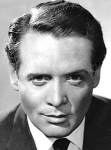
Lee pulls another photo, this time of a Soviet Flag Officer, from his folder and places it on the board. It is not as grainy and is obviously taken with a long lens from altitude. It shows a barrel-chested, heavyset man with a square jaw, deep‑set eyes and a heavy, nearly uni-brow with steel-grey, Soviet regulation hair. "He has been confirmed to be in the AO, as you can see."
Flipping a page in his folder, Adams continues. "To assist him is this man, the number two man in what has become known as the Siret Operational Group, Lieutenant Colonel Sergei Andreevich Borovsky."
Taking the next photo out of the briefing folder, he pins it beside the photo of Korotkov. It is a photo seemingly taken in the field. Pictured is a lean, wiry, athletic man— the build of a man who still runs with his recon teams—in a Spetsnaz field coat. He is a taller man with angular, sharp cheekbones and a narrow jawline. He has straight, jet-black hair, regulation cut but slightly grown out, and a black mustache in the Soviet Army style. Even with the grainy, telephoto nature of the photo, his light-colored eyes seem predatory and sharp. This could be because he seems to be looking directly into the camera lens.
"Borovsky, a Spetsnaz‑trained Motor Rifle officer commands SOG’s reconnaissance and security forces. These forces are most likely built around a detachment of the 22nd Spetsnaz Brigade and likely includes Naval Infantry forces," Lee looks up and at Thrace and McBride. "It is most likely that the forces you ran into on the ridge were part of Borovsky’s group. His forces have been confirmed to include Spetsnaz hunter‑killer teams, BRDM‑2 recon platoons, Motor Rifle scouts, MVD special detachments and SIGINT and HUMINT cells. Whereas Korotkov is brutal and methodical, he is also prone to letting his anger drive him. Borovsky is much different. He is cold and calculating. While Korotkov has significant political connection, Borovsky has never concerned himself with politics. He is a pure hunter."
"Recent SIGINT indicates that there seems to be some friction between the operation’s top two officers. They seem to have been stepping on each other’s toes over recent tasking, especially after two incidents: the first was the infiltration and destruction of a forward refueling point belonging to Korotkov’s forces. Intercepts describe a reinforced platoon of commandos assaulting the location, destroying vehicles, killing the small garrison and igniting a 12,000 litre fuel point before fading away without a trace. Our assets have confirmed the facility’s destruction. The second incident affected Borovsky, as one of his Spetsnaz Hunter-Killer teams unexpectedly went radio silent and then seemed to fall off the face of the earth. A later patrol found that team’s remains several days later. Intercepts indicated that the team was taken out before they knew it, as they were still in patrol formation and didn’t seem to have had an opportunity to react to contact. It seems that the commanders blame each other for security lapses that they claim led to the losses. However, make no mistake, they know how to compliment each other to get the job done."
Lee pauses to take a sip of coffee before continuing. During the pause, SSG Beltrain speaks up. "Excuse me, Captain, but Borovsky’s boys are already well west of the Siret. We saw their tracks. They’re hunting."
Lee Adams stops his current sip of coffee, lowering the mug a few inches. Meeting Beltrain’s eyes, the S2 says, "We know. And we’re sending you right into their backyard." Lee lets that soak in. Thrace seems impassive, unreadable. McBride quietly lets out a long breath he hadn’t realized he was holding. Beltrain exchanged looks with several of his troops.
Adams continued, "Here’s what we know about the units in the area. 37th Guards Motor Rifle Regiment (Mrr)Motor Rifle, Two battalions forward deployed in assembly areas east of Adjud; A third Battalion in Tactical Reserve. Vicinity of Grid: NU 3501 35T MM 9962.
"112th Artillery Group (Ag)Reinforced Artillery As Follows: 2S3 Akatsiya 152mm SP Howitzer. Range: 17.3 km.18 tubes confirmed. NU 3620 35T MM 9069 area. Indications are that this is to be the primary indirect fire support for 37th MRR crossing operations.
"BM-21 Grad 122mm MRL. Range: 20+ km.12 launchers confirmed. Dispersed in orchards east of Adjud in the vicinity of NU 3498 35T 35T NM 1912. Area fire threat to BDE assembly areas.
"2A36 Giatsint-B 152mm Field Gun, towed. Range: 27 km. 6 tubes assessed. Vicinity of NU 3710 35T MN 9608 . Extended range provides threat to BDE support area.
"Additionally, there are rumor of between two and four 2S7 Pion SP howitzers. These long guns have a 47.5 km range. If these rumors are true, they represent the single biggest threat, simply because we have nothing to be able to match its range. From almost any point north of Onești, these units would be capable of hitting Brigade HQ in its current location."
Adams lets that point soak for a beat. "We have also confirmed the presence of the 45th Engineer Battalion Combat Engineer (Bridge) with two pontoon bridge sets currently located at Siret River Crossing Sites: Nu 3412 35T MM 9577 And Nu 3589 35T MM 9381.
"Reaching into Borovsky’s wheelhouse, multiple sources have confirmed the presence of the 7th Independent Reconnaissance Company providing Reconnaissance HUMINT and SIGINT. Indicators suggest two platoons operating west of the Siret.
"And Borovsky's Spetsnaz Detachment Spetsnaz, derived from a cadre of the 22nd Spetsnaz Brigade (Assessed) and operating along the Siret Valley Western Ridgelines and beyond."
"What the enemy holds, Siret Valley overview: The Siret River Valley runs roughly north-south through northeastern Romania. The valley floor averages 3–5 km in width and is dominated by alluvial farmland and scattered villages providing limited cover and concealment on the primary mechanized axes. The valley is bordered on the west by the Eastern Carpathian foothills — rising sharply to 800–1,200m — and on the east by the Sub-Carpathian plateau. The terrain strongly favors the the 173rd as defender west of the Siret but offers largely unobstructed corridors for mechanized advance on the valley floor. AXIS BEAR (N-11 highway) represents the highest-speed, highest-capacity approach and is assessed as the most likely primary axis for 37th MRR exploitation."
Adams puts up a weather diagram. "Your mission weather and light data is as follows:
"Daylight/Moonlight data indicates Sunrises approx 0645-0700hrs; Sunsets approx 1740-1800hrs. Moonset tonight is approximately 2000 hrs. Moonrise tomorrow will be approximately 0730. Each day add 40 minutes to these times. However, this is not expected to be a major factor due to cloud cover forecast.
"Illumination will be Minimal at best with the overcast.
"Cloud Cover: Overcast skies are expected to remain throughout the forecast period.
"Temperatures. This will be a critical consideration. Current forecast indicates continued Arctic Temperatures. Highs are expected to remain around -15C and lows around -30C, possibly dipping to -40C not including Wind chill.
"Precipitation Forecast: Flurries and light snow today…" Adams pauses and looks up, then to the door. In the silence, everyone can hear the howling wind and precipitation hitting the roof. He looks back to the group, "…through the 3rd. The 4th and 5th, should be without measurable precipitation but will see a dip in temperatures. More snow is expected after that with the potential for squalls. This pattern is expected to repeat for the next 10 days.
"The recent and current weather allows Soviet forces nearly free reign as long as the land remains frozen. Once the Spring thaw arrives, the whole valley basically turns into bog. For this reason, we believe time is short.
"For this reason, your mission preparation will begin with local intensified training and evaluation. All new personnel selected for this mission will immediately undergo evaluation and concentrated Arctic refresher training in preparation for this mission. Skills deemed to be critical include: Cold Injury Prevention & Personnel Sustainment, Arctic Movement & Navigation, Arctic Survival & Fieldcraft, and Weapons Employment in Cold Environments. Normal Arctic Training would cover additional subjects and a 36-hour Capstone Exercise, however, time is of the essence. This will necessitate condensing the training into the next three days in the field. Effective 0430hrs in the morning, the new personnel will report to the chow hall for a hot breakfast and pick up 3 days’ rations. Immediately following this, Patrol Leaders will perform final equipment checks and the group will move out immediately thereafter."
Adams closes the folder he has been working from and looks around the room. He studies the faces before him, old and new. After a solid 2 minutes, he says, "This concludes your S2 briefing. Remember, this information remains classified. Any questions?"
*Edited to correct grid coordinates.